

gravel driveway Repair & Installation
Gilman Driveway & Land Services provides professional gravel driveway installation, grading, and repair for homes, camps & farms. From building new driveways to fixing potholes, washouts, and drainage issues -- we create smooth, durable surfaces designed to handle Maine weather and heavy use.
Gravel Driveway Installation & Maintenance Services
Whether you need a new driveway built from scratch or an existing driveway repaired, we focus on proper grading and drainage to ensure long-lasting results.
Washouts, potholes, ruts, and low spots can quickly make a driveway difficult to drive on. Our grading process restores a smooth surface while improving water runoff to prevent future damage.
We install new gravel driveways with the correct base preparation and shaping, and we repair existing driveways by regrading, spreading fresh gravel, and/or correcting drainage problems that cause recurring issues.
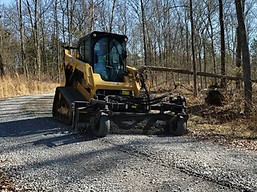
With skid steer attachments ranging from a bucket, to a grader, to a vibratory compacting roller -- we take care in doing it right; step-by-step.
Common driveway problems we fix:
-
Driveways washing out after heavy rain
-
Potholes and ruts
-
Standing water and drainage issues
-
Muddy driveways after Spring thaw
Project Photos: Before & Afters


Our Gravel Driveway Approach
While every property is different, our goal is always the same: build a driveway that provides reliable access, sheds water effectively, and stands up to Maine's weather.

#1 Site Evaluation & Planning
Every project begins with a site visit. We evaluate the property's terrain, drainage, intended use, and current base material to determine the best approach for your driveway.

#2 Clearing & Preparation
For new driveways, driveway extensions, or parking pads -- vegetation, organic material, and unsuitable soils may need to be removed before construction begins. Establishing a stable base is key to long-term performance.

#3 Rough Grading & Driveway Shaping
We establish the driveway layout, width, and elevation while shaping the surface to encourage proper drainage. Water is one of the biggest threats to any driveway, so grading is a key part of the process.

#4 Gravel Installation
We handle the gravel ordering & delivery oversight from our recommended gravel pits in your area. Onsite for each delivery; we then install and grade the appropriate crushed aggregate materials for the project; compacting after each layer.

#5 Final Grading & Finishing
Once materials are placed, we perform final grading & compaction to create a smooth surface and ensure water drains away properly. The result is a driveway designed for durability, functionality, and everyday use.
#6 Ongoing Maintenance & Repairs
Even well-built gravel driveways require occasional maintenance. We also provide driveway grading, resurfacing, pothole repair, and drainage improvements to help extend the life of your investment.
What exactly is 'gravel'?
Not All "Gravel" Is Created Equal
We've seen many driveways built with materials that simply weren't intended for vehicle traffic (or for plowing/shoveling!). One common example is pea gravel, which is small smooth, rounded stones, which are not even easy to walk on. Loose crushed stone (sometimes referred to as 'washed stone' can be nice for parking areas, RV sites, etc. but isn't recommended for driveways that require snow removal.
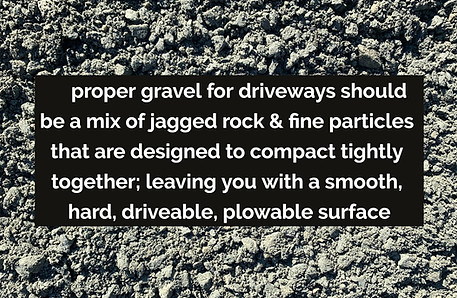
A properly constructed driveway uses crushed aggregate materials that compact into a stable surface. The angular stone & fine particles lock together, creating a driveway that handles traffic better, sheds water more effectively, and lasts longer.
Using the right material from the start can save homeowners significant maintenance and repair costs down the road.

Gravel Driveway Pricing
The cost of your project will depend on factors including the length and width of your driveway, how much base material and/or gravel is needed, and how much prep work is required.
Reach out to request a free estimate!

Driveway Resurfacing ($)
If your existing gravel driveway has developed ruts or rocks are rising to the top but there's plenty of material to work with, we can resurface your driveway efficiently.
By churning up & re-mixing your gravel driveway, then compacting it -- you'll give your gravel driveway new life.
This service is the least expensive, as it doesn't require new material or addressing tricky areas.

Gravel Driveway Repair ($$)
If your existing gravel driveway has a variety of issues, from potholes to wash-out, we'll fix the issues then resurface your driveway with our grading attachment.
This service costs a bit more, as new material will be needed, and additional time will be spent to prep and repair issues.

New Gravel Driveway Installation ($$$)
Installing a new gravel driveway normally begins with a 'rough-in' to provide site access to large construction vehicles. This process may include removing trees/stumps/brush, removing the organic top layer of earth and replacing with a base of larger stones, then adding layers of gravel, and compacting it.
After construction is complete -- we come back to add the final layers of gravel and properly grade/compact it to give you a smooth, finished gravel driveway.
This service is naturally the most expensive, as it includes more labor, machine time, and all materials.